Loading
Loading

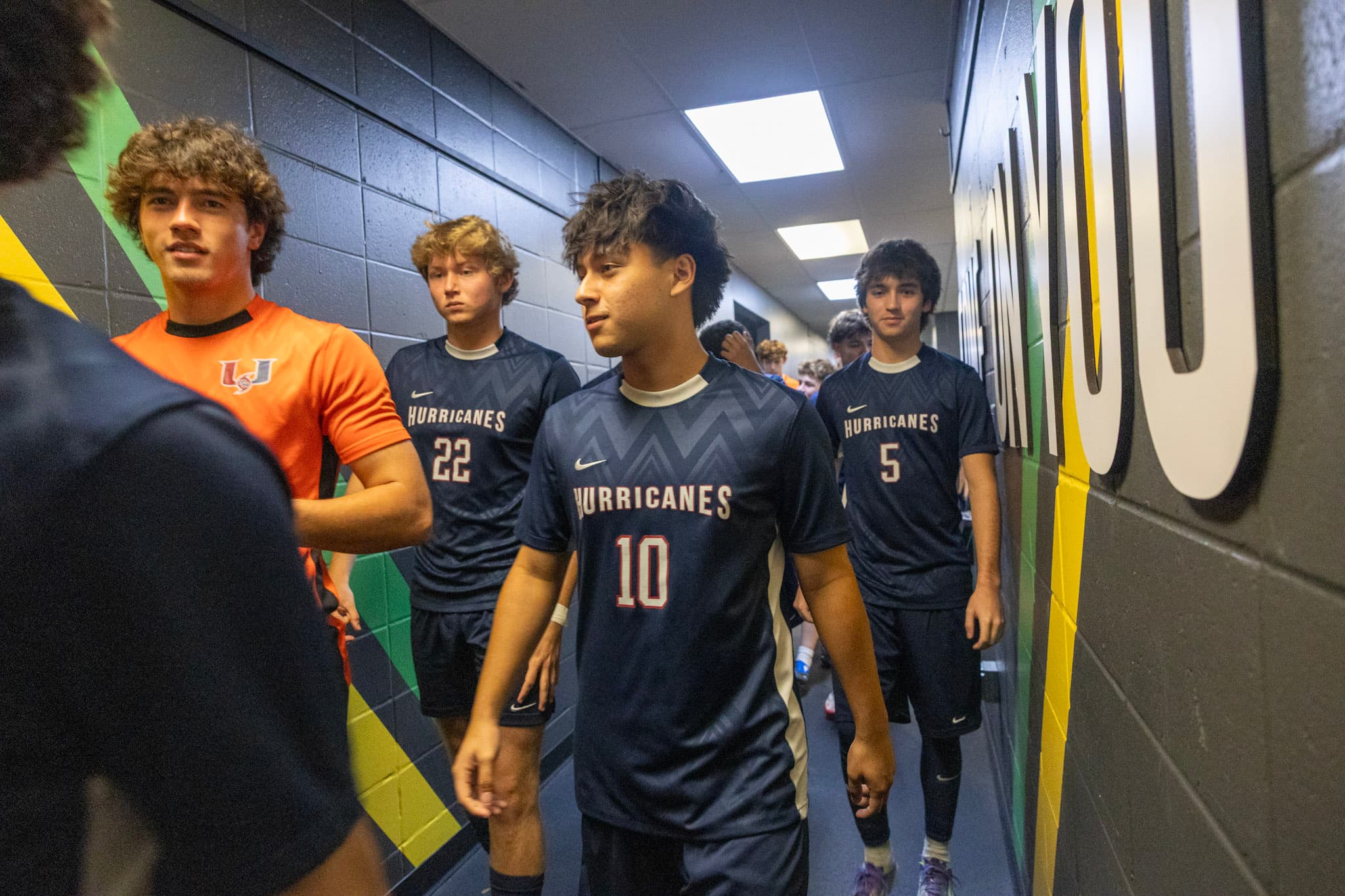
And we’re there. On the school field, behind the school crest, with zero gate to clear. Champions League soccer the way it should be. Earned, not bought.
Select a region to see news, teams, fixtures, and standings tailored to that area.


The High School Champions League began in 2018 with a bold vision: a premier stage where high school athletes could push their limits, compete fiercely, and grow as leaders. From its roots as a small Tampa Bay competition, HSCL has evolved into a five‑region powerhouse, reaching more than 100 schools and over 2,000 student‑athletes annually. Pay‑to‑play isn’t a gate here. Your school is.


Zero economic barrier. Cleats and a school crest is all you need.
Objective, public metrics. No invite list. No back room.
The crest you wear is the one on your school's gym wall.

Stay updated with the latest stories from the league
The Case for HS Soccer High school soccer remains one of the most accessible, community‑driven, and developmentally meaningful pathways for young athletes—especially in an era where pay‑to‑play club soccer has grown increasingly expensive, exclusive, and disconnected from the everyday student experience. While club soccer undeniably offers high‑level competition, its financial barriers and selective structure often limit who gets to participate. High school soccer, by contrast, provides a competitive, affordable, and culturally significant alternative that strengthens both players and communities.High school soccer’s greatest strength is its accessibility. Club programs routinely cost families thousands of dollars per year, not including travel, equipment, and tournament fees. This model inherently excludes talented players whose families cannot absorb those costs. High school soccer eliminates that barrier. Every student, regardless of socioeconomic background, has the opportunity to compete, develop, and be seen. This inclusivity is not just a moral advantage—it expands the talent pool and ensures that gifted athletes aren’t lost simply because they cannot afford club fees.Beyond affordability, high school soccer offers something club soccer cannot replicate: community identity and school pride. Players represent their classmates, teachers, neighborhoods, and hometowns. Rivalries are local, meaningful, and deeply rooted. Games draw crowds of peers and families who share in the excitement and celebrate the athletes’ achievements. This sense of belonging fuels motivation, builds confidence, and creates memories that last far beyond graduation. Club soccer, with its regional travel and fragmented team structures, rarely provides this same emotional connection.High school soccer also plays a crucial role in player development, especially when supported by strong coaching and competitive scheduling. While club soccer markets itself as the premier developmental environment, high school programs increasingly mirror professional structures—emphasizing fitness, tactical understanding, and team cohesion. Many high school coaches are former college or club coaches who bring elite experience into the school setting. Moreover, the high‑stakes nature of school rivalries often pushes players to perform under pressure, a skill essential for advancement to higher levels.Another overlooked advantage is access to exposure. College coaches are recognizing that high school soccer offers a more complete picture of an athlete’s character, leadership, and resilience. They see players competing for their school, balancing academics, and contributing to their community—traits that matter just as much as technical ability. As movements like the High School Champions League continue to elevate the level of competition, high school soccer is becoming an increasingly credible platform for recruitment.Finally, high school soccer restores the purity of the sport. It removes the transactional nature of pay‑to‑play and returns soccer to what it should be: a game driven by passion, teamwork, and opportunity. When players compete for their school, they do so not because their families paid for a roster spot, but because they earned it. That merit‑based environment fosters accountability, humility, and genuine competitive spirit.In a landscape where youth sports are becoming more commercialized, high school soccer stands as a vital counterbalance. It is affordable, inclusive, competitive, and deeply meaningful. For many players, it is the most authentic and accessible path to growth. For communities, it is a source of pride. And for the sport itself, it is a reminder that soccer thrives when everyone has a chance to play.

Chattanooga, Tennessee high school coaches have joined together to start the sixth high school soccer champions league in the US. Play will begin in Spring 2027 with a 4-team boys pilot program, followed by a full rollout for boys and possibly girls in Spring 2028.More news will be posted on this development in the coming days.
The High School Champions League Position on Pay‑to‑PlayThe High School Champions League’s position on pay‑to‑play club soccer is far more nuanced than critics often assume. It reflects the thinking of most high school soccer coaches.High school coaches are not opposed to pay‑to‑play as a concept, nor do they object to players participating in club soccer. In fact, most high school athletes also play in pay‑to‑play environments, and most high school coaches support them doing so. The issue is not the existence of pay‑to‑play. The issue is how pay‑to‑play behaves within the broader soccer ecosystem—and the consequences that behavior has for access, respect, and fairness.High school coaches consistently raise two specific objections. First, they object to pay‑to‑play proponents attacking or downgrading high school soccer, often under the guise of “development philosophy.” These critiques frequently come from individuals or organizations with a financial incentive to steer players away from high school programs. When economic motives are disguised as developmental arguments, it undermines trust and damages the relationship between two systems that could otherwise coexist.Second, high school coaches object to the exclusion created by financial barriers inherent in pay‑to‑play. The model, by definition, limits participation based on ability to pay. This is not a philosophical debate—it is a practical reality. Families who cannot afford thousands of dollars per year are shut out, regardless of their child’s talent or passion. High school soccer, by contrast, is almost universally free of financial barriers. It is one of the last remaining merit‑based, accessible pathways in American youth soccer.Because of these two issues, high school coaches adopt a simple, reasonable stance:Live and let live.Work with us—or at least stop working against us.Acknowledge that pay‑to‑play introduces exclusion.Recognize that high school soccer does not.This is not an anti‑club position. It is a pro‑player position.For decades, the pay‑to‑play world and the high school soccer world coexisted peacefully. Players moved between the two environments, gaining different experiences and benefiting from both. High school coaches are not trying to end that relationship; they are trying to preserve it. They simply ask that pay‑to‑play organizations show respect for high school soccer and take meaningful steps to reduce or eliminate exclusion based on financial barriers.Some clubs already do this exceptionally well. They offer scholarships, sliding‑scale fees, or community‑based programming that ensures access. But many do not. And when those same clubs criticize high school soccer, the message becomes clear: the objection is not developmental—it is financial.High school soccer’s case would be weak if it were absolutist. “No pay‑to‑play for any reason!” is not a defensible position. It is just as unreasonable as the pay‑to‑play argument that says, “No high school soccer for any reason!” Both extremes fail because they ignore the needs of players and the realities of the soccer landscape.High school soccer’s actual position is far more constructive: Let’s work together. Let’s respect each other’s role. And above all, let’s find ways to include people rather than exclude them.This is the foundation of a healthy soccer ecosystem—one where development, opportunity, and community are not determined by a family’s ability to pay, and where high school soccer and pay‑to‑play can coexist, complement each other, and serve the players who depend on both.